Seagrass: A Blue Carbon Sink
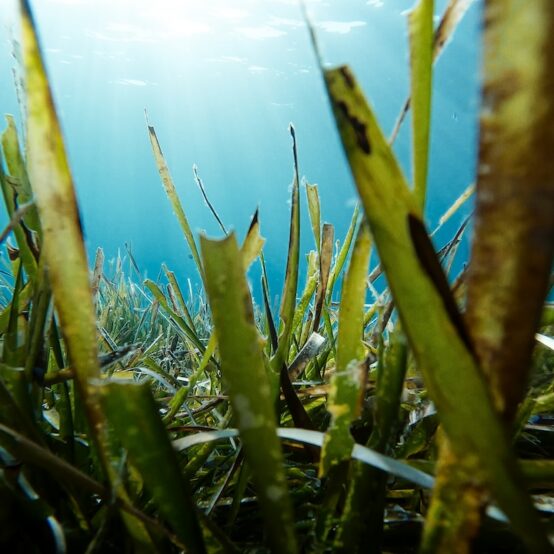
Seagrass is a coastal ecosystem that can store significantly more carbon than terrestrial forests. However, Thailand’s seagrass beds are currently being degraded by coastal sedimentation and human activities, affecting both carbon sequestration capacity and marine species that rely on seagrass as a food source.
The Company, in collaboration with the Department of Marine Science, Faculty of Fisheries, Kasetsart University, led by Asst. Prof. Dr. Thon Thamrongnawasawat, has continued its seagrass conservation and restoration project for the third consecutive year. The project aims to develop restoration planting techniques, increase survival rates, and concretely measure carbon sequestration potential.

Status of Thailand’s Seagrass: Why Restoration Is Needed
- Degradation of Seagrass Beds — More than 4,931 rai of seagrass areas have been degraded by human activities across six provinces, mainly due to coastal sedimentation and boat traffic.
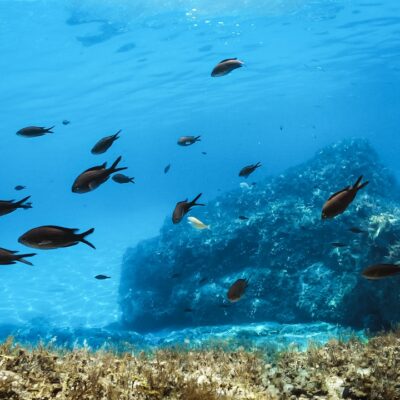
- Impact on the Ecosystem Chain — Seagrass serves as an important food source for dugongs and other marine species. The degradation of seagrass beds therefore affects the survival of these species.
- Carbon Opportunity — Seagrass restoration helps restore carbon sequestration capacity, offering a solution that benefits both ecosystems and climate change mitigation.
Accumulated organic carbon in seagrass-covered areas
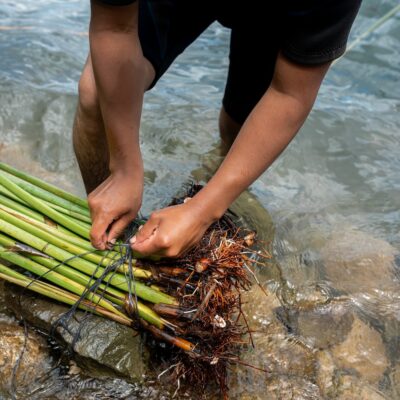
Propagation and Experimental Planting of Seagrass at Tha Rai Island
Continuous Project Implementation (2024–2025)
Actions Implemented in 2024–2025
- KU-SST technique — KU Smart Site Selection, an innovation for assessing suitable planting areas, has helped increase the survival rate and expansion of seagrass. The technology has now been transferred to all five regional centers of the Department of Marine and Coastal Resources nationwide.
- Planting in areas where seagrass had not previously existed — Developed seagrass planting techniques for new areas and continuously monitored growth for up to 10 months
- Three Core Infrastructure Components — Tissue culture laboratory (the first in the world to successfully propagate Enhalus acoroides seagrass), seagrass nursery, and nursery ponds
Survey and Assessment
- Conducted site surveys and assessed suitability prior to planting
Capacity Development
- Developed techniques and personnel capacity to help mitigate impacts on existing seagrass beds
Target Setting
- Proactively select target areas for restoration
Area Expansion
- Expand restoration planting efforts to new areas
Results of the Carbon Stock Study (tons/rai)
(connecting seagrass beds)
remark: The data are presented in descending order of carbon stock. The accumulated soil organic carbon in sediment at a depth of 20 cm around Tha Rai Island, Nakhon Si Thammarat Province, indicates that seagrass-covered areas, particularly those dominated by Enhalus acoroides, store significantly higher levels of carbon than areas without seagrass.
SE = Enhalus acoroides seagrass | SM = Mixed seagrass species | NS = No seagrass cover