
Commitment to Biodiversity
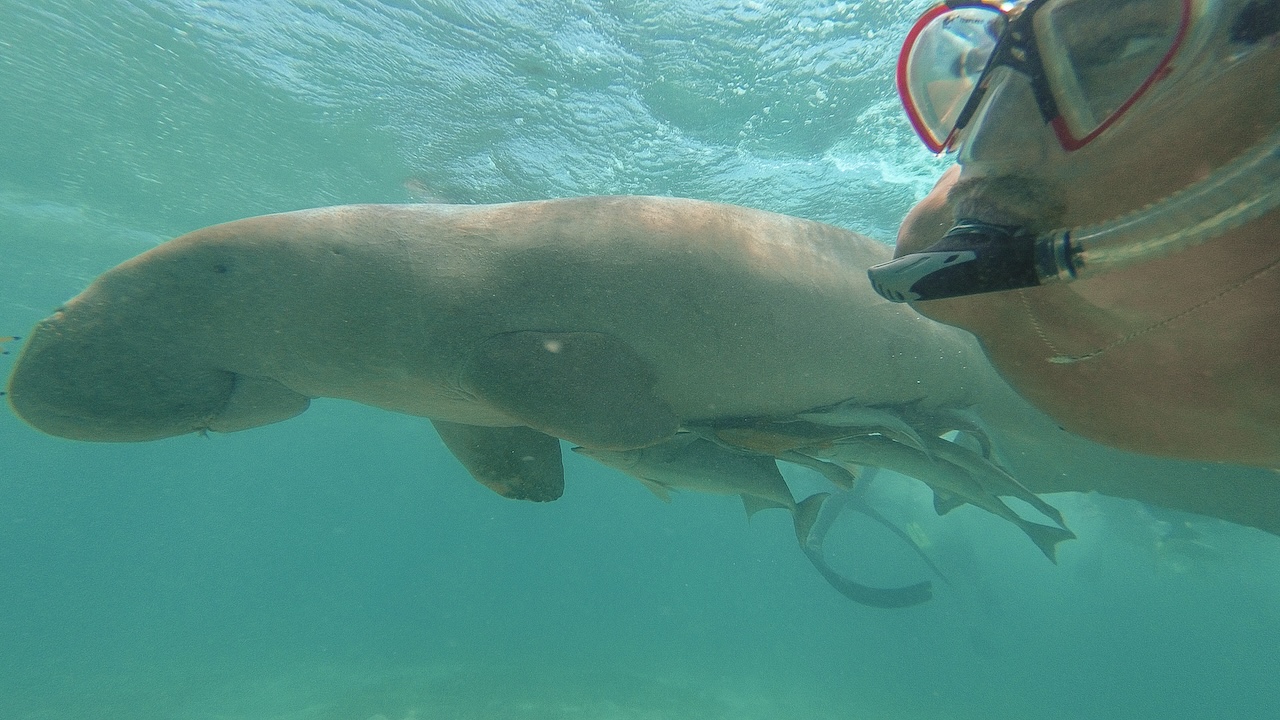
The Company believes that protecting marine biodiversity must begin with restoring the "habitats" that form the foundation of ecosystems, with seagrass meadows being one of those vital habitats. Seagrass is not merely an underwater plant, but a crucible of biodiversity—serving as a feeding ground, a nursery for juvenile marine life, and a sanctuary for numerous species, including the rare dugong. When seagrass meadows flourish, the biodiversity of the area thrives alongside them.
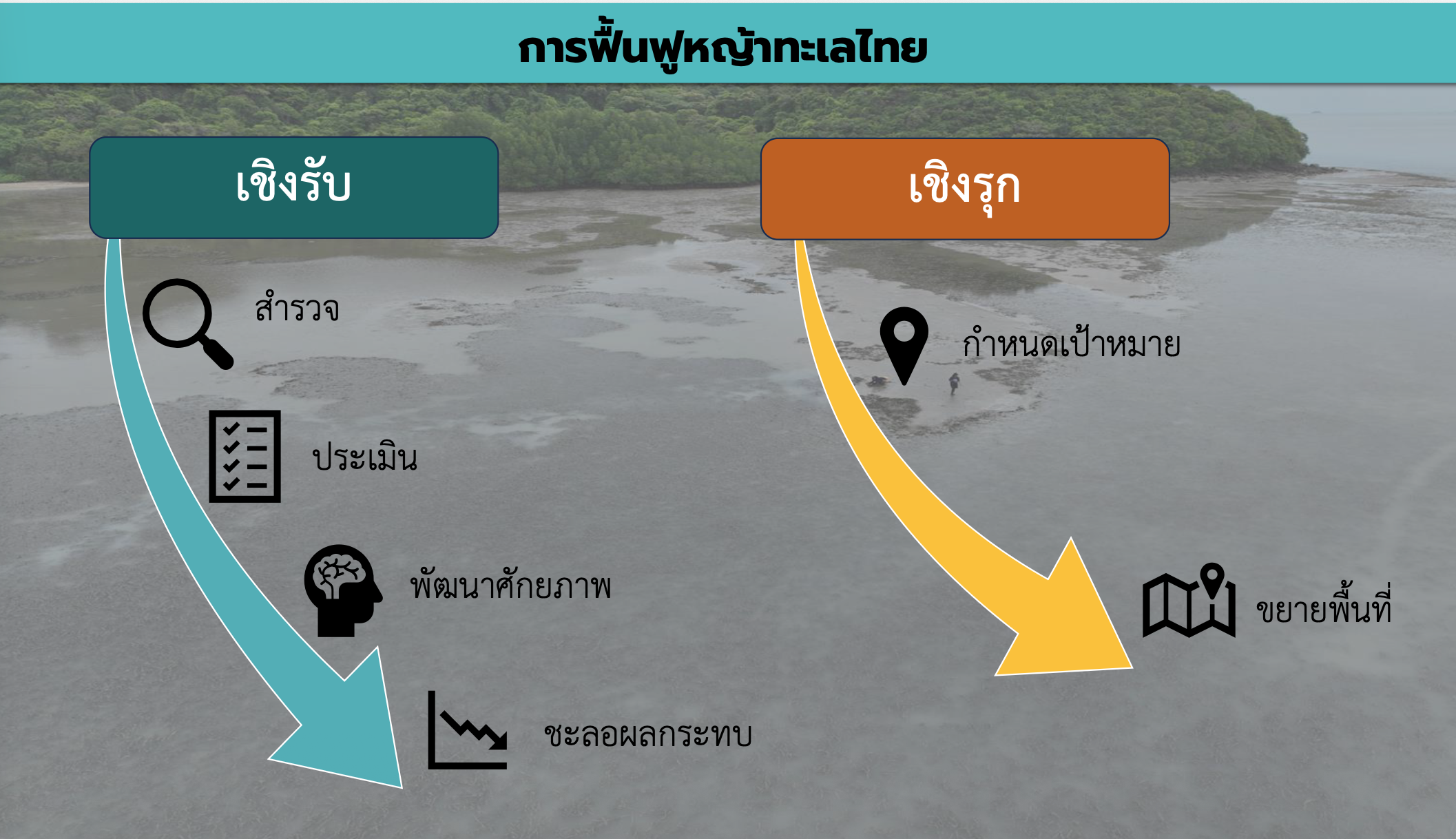
The Company is therefore committed to conserving and restoring seagrass meadows, while managing impacts in accordance with the Mitigation Hierarchy (Avoidance → Minimization → Rehabilitation → Offsetting). We aim to avoid and minimize negative impacts from our operations and supply chain, while collaborating with government agencies, academic institutions, and non-profit organizations to scale up conservation efforts to a national level.
776–1,293
tons/rai — Amount of carbon sequestered by seagrass meadows, based on a study of the Koh Tha Rai area in Nakhon Si Thammarat Province.
1,000
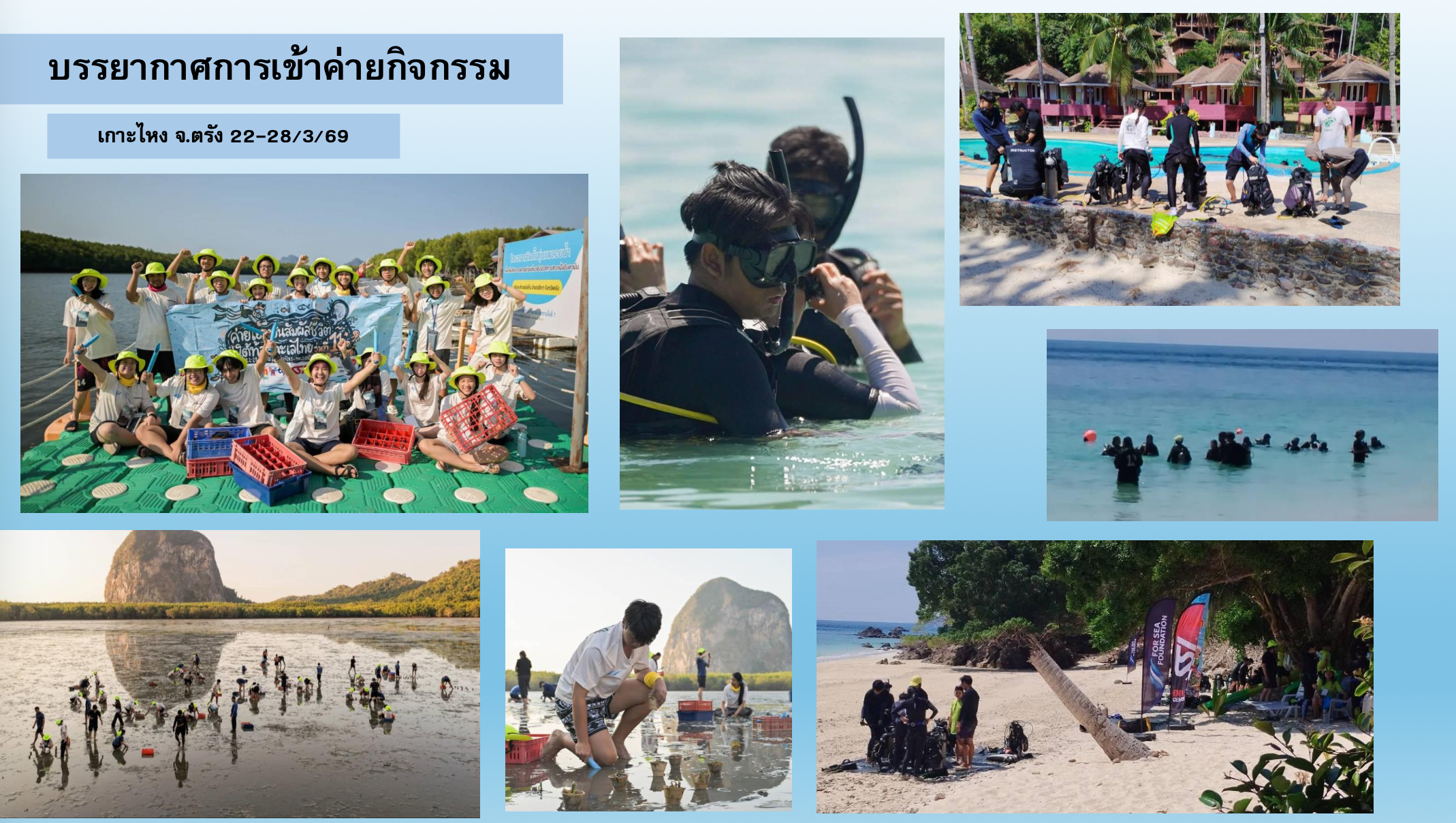
Number of seagrasses planted in the 11th Touch of Marine Life Youth Camp Project
100
ร้อยละ 100 ของวัตถุดิบหลักมาจากพื้นที่ที่ปราศจากการตัดไม้ทำลายป่า
Composition of
Management Structure
Partnership and Collaboration to Mitigate Biodiversity Loss
Government Agencies and Regulatory Bodies — The Company supports a collaborative research project with Kasetsart University. The newly developed knowledge in seagrass planting site assessment techniques (KU-SST) has been transferred to all 5 centers of the Department of Marine and Coastal Resources nationwide, scaling up coastal resource restoration efforts to a national level.
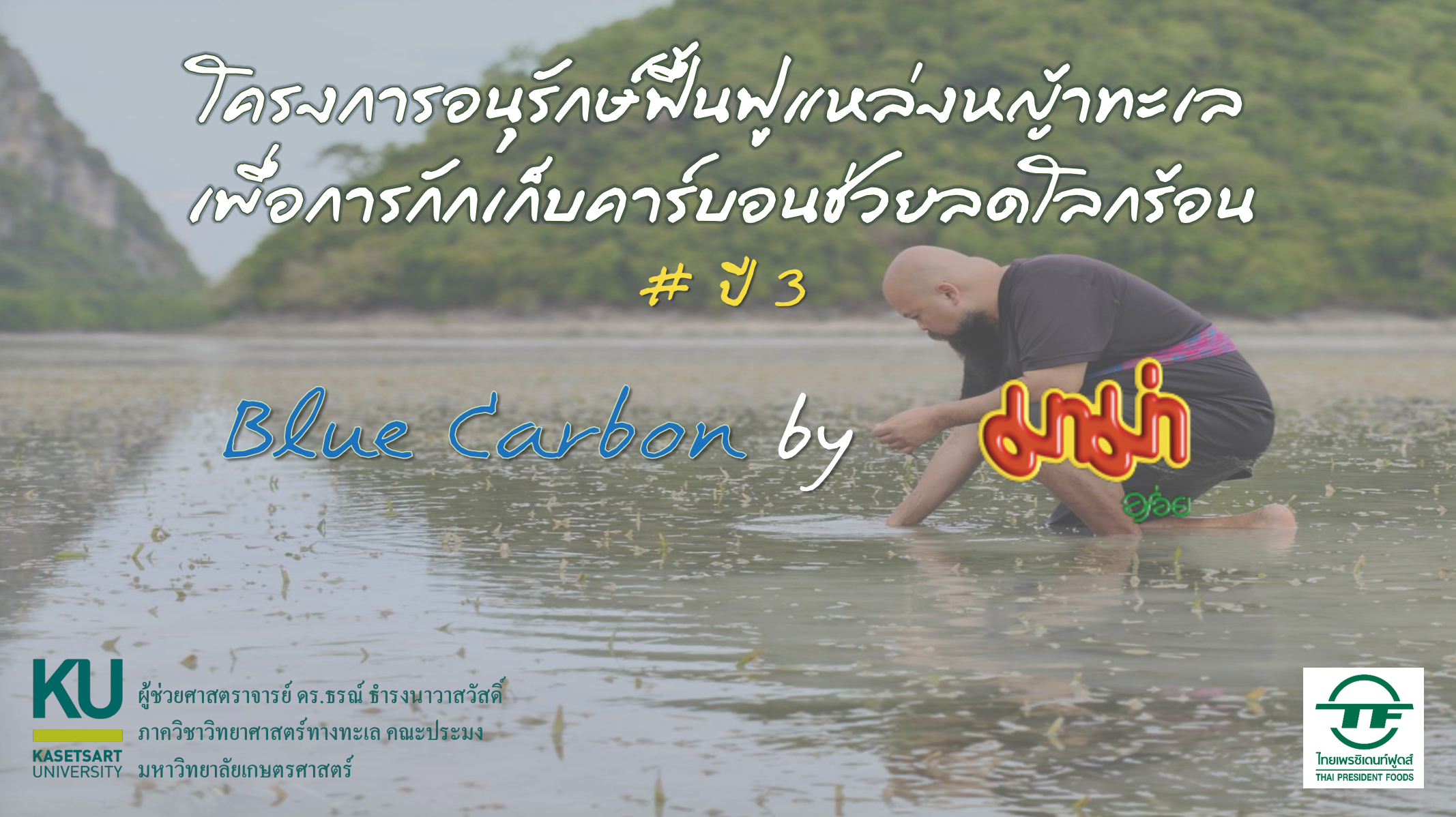
Academic Institutions and Non-Profit Organizations — The Company operates in collaboration with the Department of Marine Science, Faculty of Fisheries at Kasetsart University, and the For Sea Foundation, alongside private sector networks. This partnership aims to drive conservation efforts and build a network of next-generation marine resource custodians.
The amount of organic carbon sequestered by seagrass meadows: 776–1,293 tons/rai (based on a study of the Koh Tha Rai area).
The number of seagrasses planted for restoration
The abundance and diversity of benthic fauna (bottom-dwelling organisms) in seagrass beds compared to unvegetated areas:
The number of youth and next-generation marine resource custodians engaged
Protection and Restoration of Biodiverse Habitats
The Company supports the seagrass meadow conservation and restoration project for carbon sequestration (Blue Carbon) in collaboration with the Department of Marine Science, Faculty of Fisheries at Kasetsart University. Located at Koh Tha Rai in Nakhon Si Thammarat Province, this highly biodiverse habitat features various seagrass species—including Enhalus (Enhalus acoroides), Thalassia (Thalassia hemprichii), Halodule (Halodule uninervis), and Halophila (Halophila ovalis)—and serves as a vital feeding ground for the rare and endangered dugong.
The study reveals that areas with seagrass cover have significantly higher accumulated organic carbon in the sediment than unvegetated areas, alongside a greater abundance and diversity of benthic fauna.
Partnership and Collaboration to Mitigate Biodiversity Loss
The Company collaborates with multi-stakeholder partnerships to drive marine resource conservation and restoration.
Government Agencies — Technical knowledge of the KU-SST methodology has been transferred to all 5 centers of the Department of Marine and Coastal Resources nationwide, scaling up coastal resource restoration efforts to a national level.
Academic Institutions and Non-Profit Organizations — Collaboration with Kasetsart University and the For Sea Foundation
Participation in Conservation Pilot Projects
The Company supports biodiversity pilot projects, including seagrass meadow restoration and the "Touch of Marine Life" Youth Camp Project, aimed at instilling conservation awareness and building a long-term network of marine resource custodians.
Moving Toward Sustainable Biodiversity Conservation
Partnership and collaboration mean more than just providing financial support; it is an investment in ecosystem restoration and in empowering the next generation to become future custodians of marine resources. The Company is dedicated to scaling up its conservation initiatives and continuously driving toward a Net Positive Impact on biodiversity.